
Judgment Game: Tricky Puzzles
Pipi Chick StudioTrivia
4.2239.00 Reviews
- Version
- 3.0.2
- Installs
- 500.00K
- Age Rating
- Everyone
Screenshots
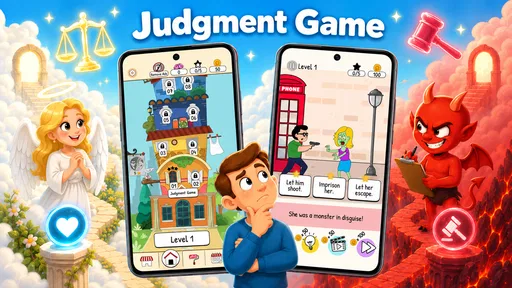
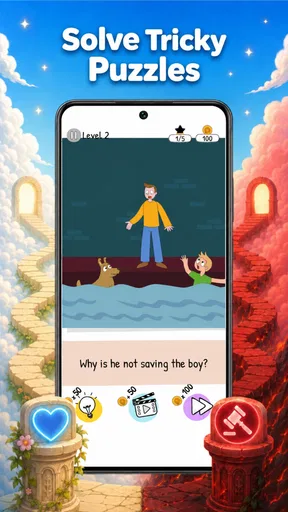
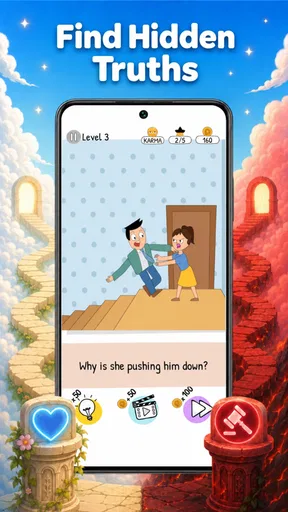
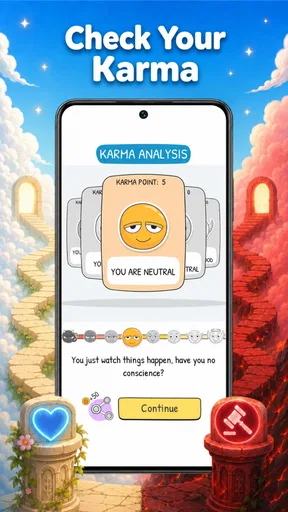
Our Review of Judgment Game: Tricky Puzzles
 Analysis by Appyee
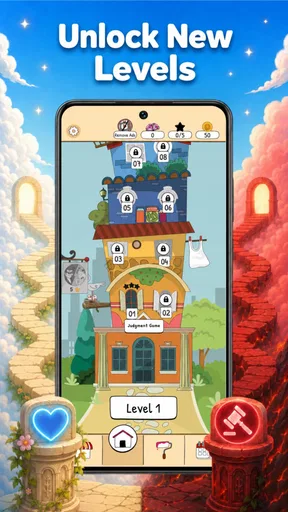
Judgment Game: Tricky Puzzles is the kind of trivia game I open when I want a quick mental challenge rather than a long, complicated session. It puts me in the role of a decision-maker, presenting social situations, difficult choices, and short life stories that ask me to judge what should happen next. My main takeaway is simple: it is more interesting than a basic question-and-answer quiz, but its enjoyment depends heavily on whether I like making subjective decisions and accepting the game’s interpretation of them.
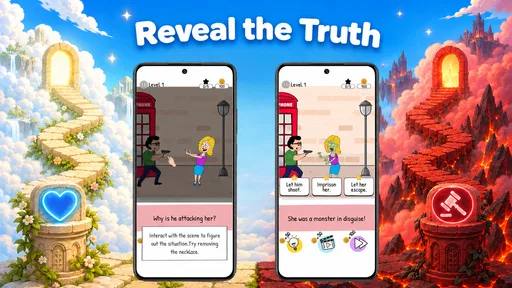
That distinction matters. This is not a traditional trivia title built around capitals, dates, science facts, or a large bank of correct answers. It is closer to a casual judgment game with puzzle elements. I read a scenario, consider the people involved, and choose the response that seems fairest, smartest, or most appropriate. Sometimes the appeal comes from solving the situation; sometimes it comes from comparing my instinct with the outcome the game expects.
How the judgment-based puzzles feel in practice
The strongest part of the experience is the way each situation encourages me to pause before tapping. A conventional quiz often rewards memory, while this game asks for interpretation. I have to notice who is affected, what details are relevant, and whether the obvious answer is actually the best one. That makes even a short round feel more personal than selecting an answer from a list of general knowledge questions.
I also like that the format works well in small gaps during the day. If I have a few minutes while waiting for an appointment or taking a break, I can play without committing to a long campaign. The scenarios are naturally suited to short sessions, and the central decision is easy to understand without a lengthy tutorial. For me, that accessibility is one of the game’s biggest strengths.
The game’s social-puzzle angle gives it a different rhythm from ordinary trivia. Instead of asking me to remember information, it makes me weigh motives and consequences. A character may appear to be clearly at fault at first, but a second look can change my opinion. That creates a useful habit: I now read the wording more carefully before making a choice, because small details can influence how I judge the situation.
The real appeal is not simply getting an answer right; it is seeing how my reasoning holds up against the game’s moral framing. That makes the experience more conversational than competitive. I can imagine playing it with a friend and arguing over a choice, especially when both of us think our own interpretation is the reasonable one.
Why the story choices are more engaging than standard trivia
Judgment Game works best when I treat every prompt as a miniature thought experiment. I do not approach it expecting objective knowledge. Instead, I ask myself what I would do, who deserves consideration, and whether a punishment or decision is proportionate. That change in mindset keeps the puzzles from feeling like routine quiz questions.
One practical tip is to separate the emotional reaction from the actual evidence in the scenario. A dramatic detail can make one character seem immediately guilty, but the better choice may depend on something less obvious. Reading the complete prompt before deciding is more rewarding than tapping the first answer that feels satisfying. This is a small adjustment, but it makes the game feel more thoughtful and reduces the frustration of choices that initially seem unfair.
Another useful approach is to play with someone else without showing your answer first. Each person can explain the decision afterward, which turns a simple mobile game into a light conversation starter. It is especially suitable for friends or family members who enjoy debating everyday behavior but do not want a demanding multiplayer game. The discussion is often more entertaining than the result itself.
There is also a good reason to avoid rushing through repeated sessions. The game’s value comes from considering each case, not from tapping as quickly as possible. If I play while distracted, the puzzles can feel shallow. When I give them a little attention, the social situations have more room to work. That makes it better for a short focused break than for mindless background play.
Where the design can create friction
The same subjectivity that makes the game distinctive can also be its most meaningful weakness. In a factual quiz, I can understand why an answer is correct even when I forgot it. In a judgment game, I may disagree with the intended decision because I interpret responsibility, fairness, or context differently. When that happens, the outcome can feel less like a logical solution and more like an opinion imposed by the game.
This is the main limitation I would explain to a friend before recommending it. If you want puzzles with one indisputable solution, this may not satisfy you. The game is built around social choices, so disagreement is part of the experience. That can be fun when the explanation feels convincing, but it can also be irritating when the scenario seems too dependent on wording or on guessing what the designer considers morally acceptable.
The experience may also lose some impact if I play for too long in one sitting. The basic decision structure is easy to understand, and repeated scenarios can begin to feel similar even when the stories change. I prefer using it in short bursts, because the format remains fresher when I leave some space between sessions. It is a casual game first, not a deep narrative adventure that I would expect to occupy an entire evening.
Players should also keep the monetization in mind. The game is free to download, but optional in-app purchases range from $0.99 to $99.99 per item. That is a wide range, so I would be careful before confirming any purchase and would check the payment settings on the device, particularly if children might use it. The free entry point makes it easy to try, but “free” does not mean every part of the experience is necessarily free.
For younger players, the Everyone content rating makes the game broadly approachable, but I would still remember that social dilemmas can lead to conversations about blame, punishment, and personal behavior. That is not a problem in itself; in fact, it can be a positive opportunity for discussion. Still, parents who prefer purely educational trivia may find the judgment-based subject matter less suitable than a straightforward quiz.
Who will get the most from it
I think this game is a good match for people who enjoy casual puzzles with a human element. If you like asking what you would do in an awkward situation, debating whether a reaction is justified, or spotting the detail that changes a story, you will probably understand its appeal quickly. It is also a comfortable choice for players who want something lightweight and do not need a complex progression system to stay interested.
It can work particularly well as a shared phone game. Imagine two friends waiting for food at a café: one person reads the scenario aloud, both choose privately, and then they compare their reasoning. The game gives the conversation a starting point without requiring a headset, a login-based competition, or a long setup. In that situation, its short-form design becomes an advantage rather than a limitation.
I would be more cautious about recommending it to someone who primarily plays trivia to test factual knowledge. If your favorite moments come from remembering historical events, identifying flags, solving word definitions, or beating a personal score, this may feel too interpretive. A conventional quiz app would be a better alternative because it offers clearer right-or-wrong feedback and a more direct sense of improvement.
It is also not the ideal choice for players looking for a rich story with developed characters. The life situations are useful as puzzle prompts, but I do not approach them as a substitute for a narrative game. The focus is on the decision, not on building a large world or following a carefully paced cast over many chapters.
How it compares with ordinary trivia and casual puzzle games
Compared with standard trivia, Judgment Game asks less of my memory and more of my judgment. That makes it easier to start because I do not need specialist knowledge, but it also makes progress harder to measure. In a factual quiz, I can study a topic and see a clear improvement. Here, improvement mostly means becoming more attentive to wording and more comfortable explaining why I chose an answer.
Compared with pure logic puzzles, it is less predictable. A logic puzzle generally gives me rules that lead to a solution, while these social scenarios leave room for personal interpretation. The trade-off is that the game feels more relatable, but the reasoning is not always as satisfying for someone who wants a clean deduction. I would choose this title for a relaxed conversation about choices, and a traditional logic game for a more rigorous mental workout.
Compared with story-driven choice games, it is lighter and more immediate. I can make a decision without investing in a long plot or worrying about managing a large set of relationships. That is convenient, but it also means the emotional consequences are more limited. The game offers snapshots of dilemmas rather than a continuous story in which my decisions reshape a character’s future.
This positioning explains why I see it as a companion game rather than my only puzzle app. It fills the space between trivia and casual moral-choice entertainment. Its strongest feature is that it turns a brief play session into a question I might continue discussing after I put the phone down.
Practical details before installing
Pipi Chick Studio is the developer behind the game, which is available as a free title in the trivia category. It has reached over 500 thousand installs and holds an average rating of 4.2 from around 5.8 thousand ratings, with 239 written reviews. Those figures suggest that the concept has found a substantial casual audience, while also leaving enough room for individual reactions to vary because the game’s decisions are inherently subjective.
The current version is 3.0.2, and the game runs on Android 6.0 or later. That makes it accessible on many older Android devices, although actual comfort will still depend on the phone’s screen, speed, and available storage. I would install it on a secondary or older device without expecting the newest hardware, but I would still keep the operating system updated where possible for general security and compatibility.
Because the game is free to begin, I would use the first sessions as a trial rather than assuming it will become a long-term favorite. Pay attention to whether the scenarios make you curious or annoyed. If you enjoy reconsidering your choices, the format may hold your attention. If you repeatedly feel that the intended answer is arbitrary, no amount of extra content will fix the central mismatch between your expectations and the game’s design.
For families, the Everyone rating makes the title easier to consider, but I would still play a few rounds personally before handing it to a child. The important question is not only age suitability; it is whether the tone of the dilemmas matches what you want on the device. A parent who enjoys discussing consequences may find it useful, while someone seeking quiet educational entertainment may prefer a factual learning game.
My final recommendation
My verdict is positive, with a clear condition: Judgment Game: Tricky Puzzles is worth trying if you enjoy social dilemmas more than conventional quiz facts. Its short scenarios, accessible controls, and emphasis on interpretation give it a recognizable identity. I appreciate that it can turn a few idle minutes into a small debate, and I find that more memorable than answering another routine question about general knowledge.
Its weakness is equally clear. The game cannot always provide the satisfying certainty of a logic puzzle or factual trivia title. Some decisions may feel debatable, and extended sessions can reduce the novelty of the format. The optional purchase range also means I would approach the free download with sensible payment awareness rather than treating it as an entirely cost-free experience.
For me, the best way to play is in short sessions, reading every scenario carefully and occasionally comparing answers with another person. That approach highlights the game’s strongest quality: it invites reflection without demanding a major time commitment. I would recommend it to casual puzzle fans, conversation-loving friends, and players who enjoy testing their instincts. I would skip it in favor of a traditional quiz or strict logic game if objective answers and measurable knowledge are the main reasons I play.
In the end, this is a modest but distinctive trivia-style game. It does not replace a deep narrative title or a serious brain-training challenge, but it does offer something those alternatives often miss: a quick chance to think about how people behave and how I would respond. For the right audience, that is enough to make it a worthwhile free download.
Verdict
Strengths of Judgment Game: Tricky Puzzles
- Clever puzzles reward careful observation rather than fast tapping.
- Short levels make it easy to play during brief breaks.
- Unexpected solutions keep the gameplay entertaining and surprising.
- Simple controls are suitable for players of different ages.
- Progressive challenges help maintain interest beyond the opening levels.
Limitations of Judgment Game: Tricky Puzzles
- Some solutions rely on trial and error instead of clear logic.
- Hints may be limited or connected to advertisements.
- Repeated puzzle patterns can make later stages feel predictable.
- Frequent ads may interrupt the flow between completed levels.
- Players seeking deep story or strategy may find the gameplay lightweight.
Other Releases by Pipi Chick Studio
View All
Dice Roller: Shake & Roll Dice
Board4.3

General Knowledge Quiz
Trivia4.4

Flags of Countries: Quiz Game
Trivia4.4

Logo Quiz: Guess The Logo Game
Trivia4.8
Similar Picks in This Category
View All
Millionaire 2026 Quiz & Trivia
Quiz & Trivia Games by Submarine Apps4.5

Brain Test 2: Tricky Stories
Unico Studio4.7

Trivia Crack: Brain Quiz Games
etermax4.4

QuizzLand. Quiz & Trivia game
Quiz & Trivia Games by Mno Go Apps4.8

Brain Test: Tricky Puzzles
Unico Studio4.7

Logo Quiz
bubble quiz games4.5
Frequently Asked Questions
What is Judgment Game: Tricky Puzzles about?
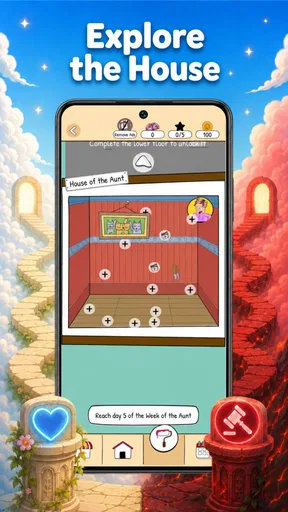
Judgment Game: Tricky Puzzles is a casual puzzle game built around short scenarios in which you examine characters, objects, and clues before making a decision. Each level asks you to identify who is responsible, spot suspicious behavior, or choose the fairest outcome. The game focuses on observation, logic, and unexpected twists rather than complex controls, making it easy to pick up for quick play sessions.
Is Judgment Game: Tricky Puzzles suitable for children?
The game is generally easy to understand because its gameplay relies on tapping, examining scenes, and selecting an answer. However, parents should review the content before allowing younger children to play. Some situations involve arguments, wrongdoing, deception, or exaggerated cartoon-style drama. The puzzles are not technically difficult, but certain scenarios may require reading comprehension and an understanding of social situations to solve correctly.
Does Judgment Game: Tricky Puzzles require an internet connection?
Many levels in Judgment Game: Tricky Puzzles may be playable without a constant connection once the necessary game data has loaded, which is convenient for short offline sessions. Nevertheless, features such as advertisements, rewards, updates, analytics, or in-app purchases can require internet access. Availability may differ between Android and iOS versions, so checking the store description and testing airplane mode after installation is recommended.
Are there advertisements or in-app purchases in the game?
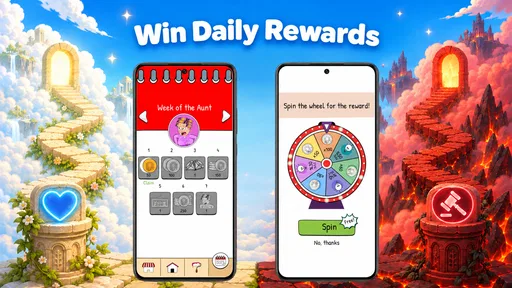
As with many free-to-download puzzle games, Judgment Game: Tricky Puzzles may include advertising and optional in-app purchases. Ads can appear between levels or when you request hints, extra chances, or other rewards. Purchases are usually intended to improve convenience rather than being essential to understand the puzzles. Before downloading, review the current store listing and your device’s purchase settings, especially if children use the device.
What should I do if I get stuck on a puzzle?
When a level seems obvious, examine the entire scene instead of focusing only on the characters or the main question. Look for unusual objects, inconsistent expressions, hidden details, and actions that do not match the dialogue. Try tapping different elements and consider the game’s preference for trick answers. If available, use a hint sparingly, since solving the puzzle independently is usually more satisfying than immediately skipping it.
Play our best games!


